
Assumptions Are Free. Rebuilding Around Them Isn't.


Marilyn Davis
The Problem With "We'll Fix It Later"
Think about what happens when a product tries to serve two different user types with the same process. First-time users need guidance because they don’t know the terms, don’t trust the system yet, and need to know what’s expected at each step. Returning users want speed; they know what to do and get frustrated by steps they’ve already mastered.
When both groups use the same process, neither is happy. First-timers get lost, and returning users are slowed down. Most don’t blame the interface itself. Instead, they leave, call support, or stop using the product.
This is not a cosmetic UX problem. Instead, it's a product architecture problem. The decision to support multiple user types through a single flow is a design decision, and it incurs costs that show up in support volume, churn rate, and customer lifetime value. It just doesn't show up on the sprint board.
Case Study: Restructuring UX for 1-800-Accountant
High-stakes UX debt is clear in fields where timing is required by law, mistakes have penalties, and users are stressed. 1-800-Accountant helps people and small businesses with tax filing and accounting, which demands accuracy and quick action. Their users include first-timers who don’t know the process and returning customers who expect things to move quickly and smoothly.
Before working with Tech9, the main customer experiences like onboarding, tax processing, and the client dashboard were not connected well. All user types followed the same paths, regardless of their needs. Important steps didn’t clearly explain what was needed or what would happen next. For people dealing with stressful tax situations, this was far more than inconvenient—it caused real anxiety and mistakes.
Tech9 didn’t just update the visuals. They completely changed how the product communicated with users:
- A new customer dashboard built around user context rather than feature access
- Different flows for different users. First-timers got clear guidance; returnees got continuity and less friction.
Users could now see their progress and knew what to do next. The product made things easier to understand and reduced mental effort.
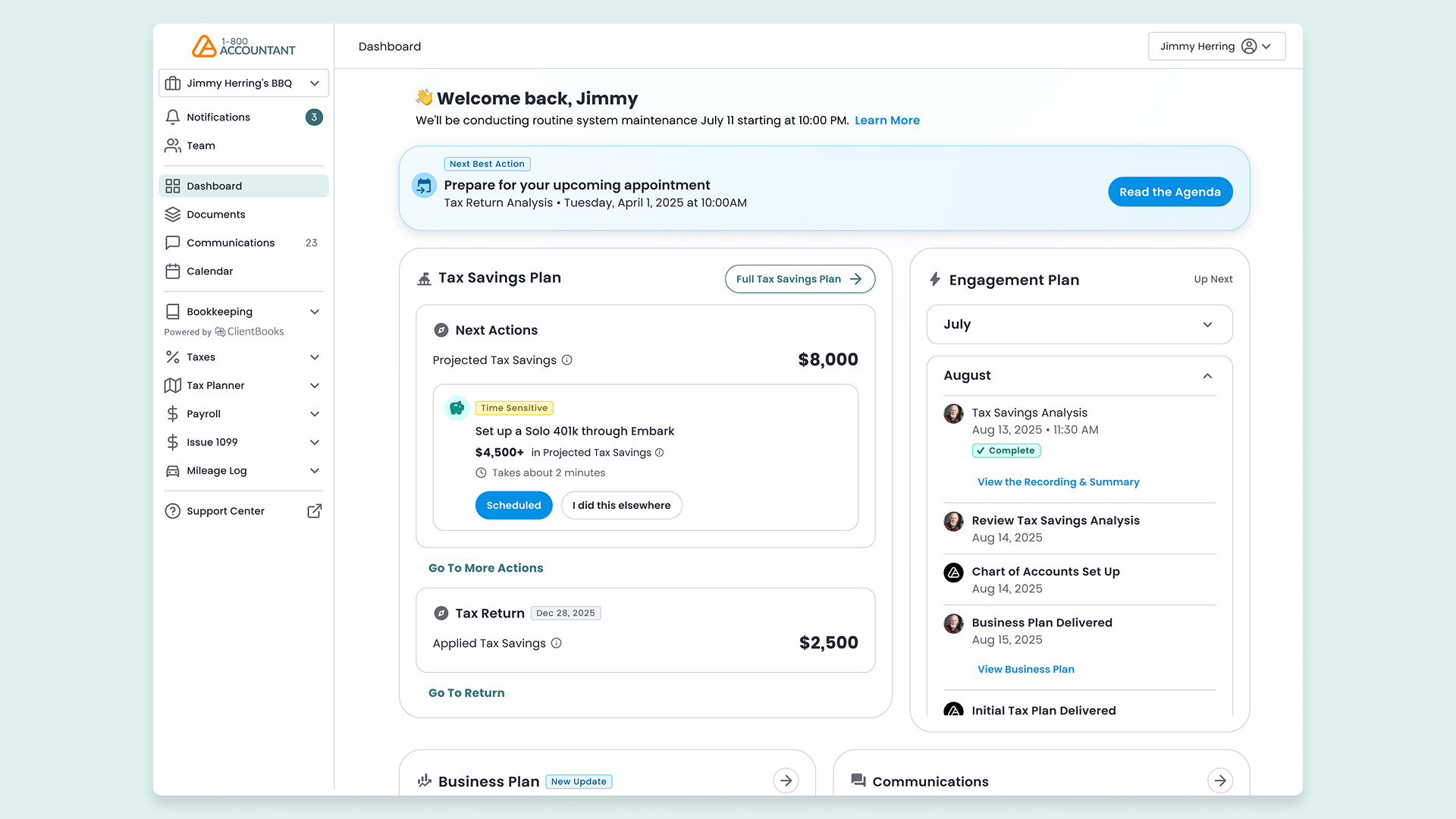
The improvements led to a more fluid, reassuring experience, directly addressing user anxiety by improving navigation clarity and reducing errors. As a result, users found it easier to complete their tasks, which built trust in the platform. Trust, once undermined by years of unnoticed UX debt, began to recover as users felt supported throughout their interactions.
UX Debt Is Technical Debt You Can't See
Senior engineering leaders intuitively understand technical debt. Shortcuts in code create future rework. A quick fix now is a refactor later.
What's less understood is that UX debt in product development works the same way—it compounds faster because it's invisible to developers. There's no deprecation warning when onboarding starts failing a new user segment. Instead, support tickets rise. A cohort never converts to paid. Customer success spends more time explaining than the product should require.
The compounding happens in three distinct ways:
- Every user who hits a broken flow forms a mental model of your product, and that model becomes inaccurate. Fixing a wrong mental model is harder than establishing a correct one from the beginning.
- Your team builds features on a broken foundation, so new features inherit the same problems.
- The fix becomes more costly each quarter you wait, as you untangle the assumptions built into every downstream decision.
What Risk-Aware UX Actually Looks Like
Risk-aware product design starts with being intentional.
This means asking early on: Who are the users for this process, and what does each group need to feel confident? Show users their progress so they always know where they are. Remove steps that only help your team, not the user. Build a design system that makes future changes easier.
Doing these things early doesn’t cost much. Waiting to fix them later is what gets expensive.
Most founders miss this basic risk, not because they don’t understand, but because the cost of ignoring UX needs is hidden and grows quietly. New features, on the other hand, show quick and clear results.
Teams that understand this early have a certain mindset: they see every UX choice as a product decision, not only about looks. They ask what risks come from sending different user types through the same process. They treat the first user experience as part of the product’s foundation, not just a test. They know design isn’t about making the product look trustworthy—it’s about making it truly trustworthy.
If your product asks too much of users, costs are accruing. Consult a Tech9 product strategist to reduce UX debt.
Let’s Talk!

